

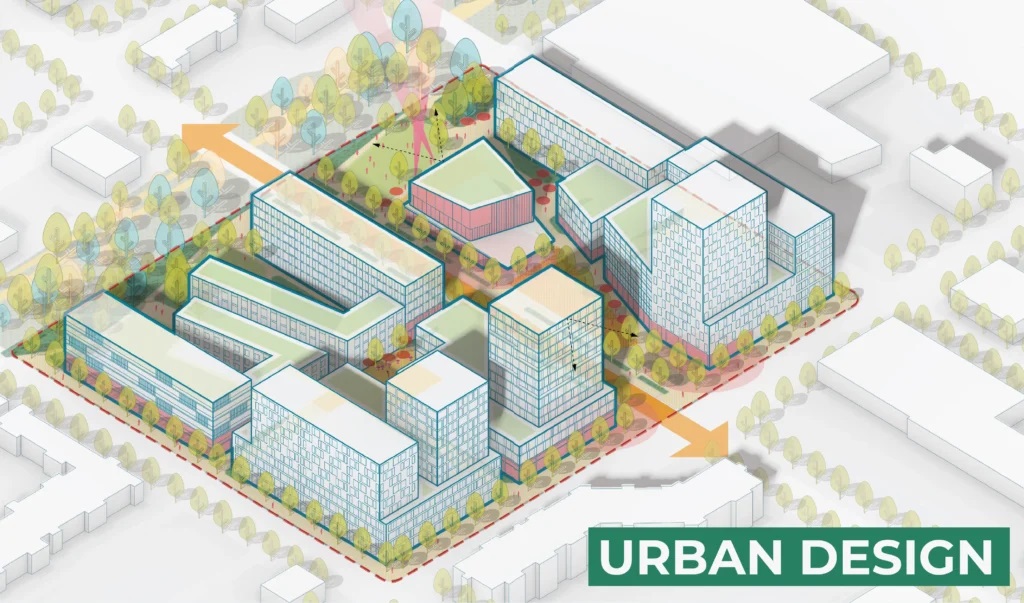
Urban design is a vital element in the development of how cities operate, expand, and provide services to their populations. With the increase of urban populations worldwide, strategic urban planning and design approaches are necessary to provide a sustainable, efficient, and habitable urban environment. It is not just a matter of how a city or a building looks; it is a combination of all the necessary components of a city that provide a unique urban experience.
What Is Urban Design?
Urban design is the art and science of designing and organizing cities, towns, and public spaces. It combines the disciplines of architecture, landscape architecture, transportation planning, and environmental science. The aim of urban design is to provide safe, efficient, and attractive public spaces that enhance the quality of life for people.
Urban design differs from building design in that it considers the larger picture, i.e., how streets are connected, how spaces are connected, and how spaces facilitate social interaction. An efficiently designed city ensures economic, environmental, and social development.

Core Principles of Effective Urban Design
Walkability and Connectivity
A successful city always caters to the needs of walkers. This means that the city has walkable roads, sidewalks, bike lanes, and public transport systems that are accessible to all.
Mixed Use Development
Urban planning has evolved significantly over the years, and it is very important for the city to incorporate mixed use development.
Public Spaces and Community Engagement
Public spaces are very important for the city. Public spaces include parks, squares, and open spaces.
Sustainability and Green Infrastructure
Sustainable urban infrastructure includes the use of renewable energy sources, green roofs, rainwater harvesting systems, and efficient waste management systems.
Urban vegetation helps to improve air quality, prevent the heat island effect, and promote biodiversity.

The Role of Technology in Urban Planning
Urban planning strategies are changing because of the impact of technology. Smart technologies assist in the monitoring of various aspects of the city using sensors. Digital technologies are used to simulate various aspects of the city before they are implemented.
Public transportation systems are being improved using tracking technologies. There are sustainable construction technologies that assist in the creation of energy-efficient buildings within the city.
Challenges in Urban Development
However, this brings some challenges, such as those concerning overcrowding, housing, pollution, and infrastructure. On the other hand, good urban planning can help solve some of the challenges, which include those concerning traffic, the absence of greens, and inequality.
Good urban planning is crucial in addressing the challenges associated with urbanization, which include the provision of housing, infrastructure, and planning for climatic changes.

The Future of Urban Design
Cities of the future will be more sustainable, have smart mobility, and be more human-centric. The concept of a 15-minute city, which implies that a person should be able to get essential services within a 15-minute walk or bike ride, is a popular idea. Adaptive reuse of existing buildings and climate-resilient design will be important.
Conclusion
Urban design is a critical component in developing cities that are not only sustainable, socially inclusive, and efficient, but can also facilitate economic growth, as well as enhance the quality of life of the people living in the cities. Therefore, as cities grow, urban design will be critical in developing healthy and smart cities.

