

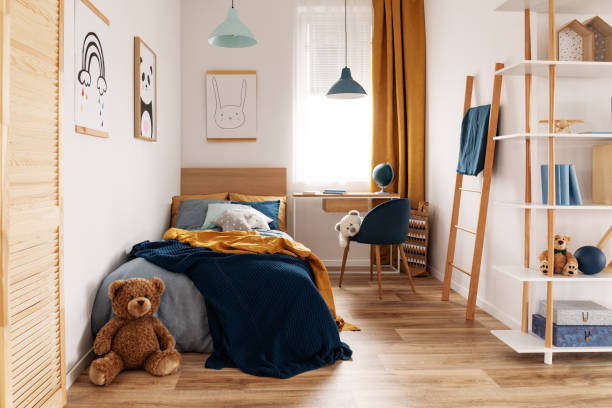
A children’s bedroom should be far more than just a place to sleep; it should be cozy, safe, and highly functional. Ideally, the room serves as a sanctuary appropriate for playing, painting, and studying. When furnishing this space, parents must consider the child’s rapid growth in height and changing needs. An intelligent design does more than organize a room; it can calm emotions, foster autonomy, and support healthy habit formation from an early age.
Prioritizing Safety and Comfort
Safety must be the primary consideration when designing a child’s bedroom. Fortunately, modern manufacturers provide furniture pieces with rounded corners, stable storage units, and non-toxic, lead-free paint that significantly help prevent common household accidents. Heavy furniture, such as wardrobes and bookshelves, must be securely fixed to the wall to prevent tipping. At the same time, outlet covers and cord organizers can prevent children from interacting with dangerous electrical components.
On the other hand, physical comfort must also be taken into serious consideration. This starts with high-quality beds that provide full spinal support, using cool or natural materials like organic cotton. Gentle, dimmable light sources are also essential to help children wind down before sleep, creating a soothing atmosphere that protects their developing eyesight.

Functional Layout and Space Planning
Effective designs should make efficient use of every square inch, allowing for free and safe movement on the part of the children. To maintain order, designated areas should be clearly allocated for relaxing, studying, and playing. This zoning enables children to follow daily schedules while still feeling a sense of accountability for their own space.
Multifunctional furniture, like storage beds with built-in drawers or folding study tables, is best used in space-constrained urban areas. Functional designs will meet the demanding needs of modern living while still providing the essential comfort a child requires to feel at home.
Encouraging Curiosity and Learning
An excellent children’s room attracts curiosity as well as supports long-term creativeness. The addition of a small, dedicated workspace with an adjustable seat promotes deep concentration during homework or imaginative storytime. For example, open shelves dedicated to books, art supplies, and learning toys ensure that items are easily accessible, encouraging children to pick up a book or a paintbrush whenever inspiration strikes.
It is generally recommended to incorporate light paint colors, such as soft whites or pastels, with vibrant accents rather than using dark, heavy colors throughout the room. In addition, interactive wall features such as photo racks, chalkboard walls, or pinboards provide opportunities for inner thoughts and enjoyable, hands-on creativity.
Designing for Growth and Flexibility
Children tend to grow up remarkably fast; paradoxically, while their bodies change quickly, their core tastes and interests often evolve in stages. With an adjustable room design that can keep up with these transitions, significant money will be saved in the long run. By investing in timeless furniture paired with adaptive solutions—for example, height-variable desks or modular shelving—parents can extend the useful lifespan of the furniture itself. With a color-neutral wall finish, it becomes very easy to renew the space through the use of detachable wallpapers or decals; hence, changing styles as the child enters their teenage years would not take much effort or money.
Personalisation and Emotional Comfort
A warm and personalized environment makes children feel safe and appreciated. By allowing them to have a say in specific colors or decor designs, their confidence grows—it reinforces the idea that the room is truly their choice. Showing their school work, art projects, or personal assignments on the walls makes the space feel comfortable and deeply personal. The environment should express their unique individuality, as this encourages a sense of belonging and emotional stability.

Last Plans
Creating a functional children’s room means carefully harmonizing protection and functionality with innovation. Rather than sticking to rigid design solutions, adopting more adaptive concepts becomes a means of developing together with the child. Such a thoughtful design will encourage relaxed moods, stable physical development, and happy daily rituals that last a lifetime.

